
Avant-monts franc-comtois
Helium in Franche-Comté: characterization of a deposit with industrial implications
Drilling surveys were carried out in the Jura foothills between the 1950s and 1970s. These revealed the presence of non-combustible gas in this region of the Doubs department (25).
In similar geological contexts, helium is associated with these non-combustible gases. 45-8 ENERGY assesses significant prospective interest in helium.
Thanks to bibliographic research data and initial field measurements, 45-8 ENERGY has been active in the area since September 2022 after obtaining an exploration license. Granted by the Ministry of Ecological Transition and the Ministry of Economy, Finance, and Industrial and Digital Sovereignty, the “Avant-Monts franc-comtois” license covers an area of 306 km² and concerns helium and related gases.
58 municipalities in the Doubs department are concerned by the PER, where geological and geophysical data has been collected since summer 2023. This data has provided a clearer picture of the subsurface and a better understanding of its geological structure.
In 2025, a new phase is being prepared: a medium-depth drilling campaign. This operation will enable 45-8 ENERGY to validate and accurately quantify the presence of helium in the area.
If the drilling and well tests are positive, further acquisitions could be carried out. Ultimately, the aim would be to valorize helium through industrial production in the Doubs region. This would enable industries with significant helium requirements to be supplied locally in an environmentally responsible way.
Avant-Monts franc-comtois exploration license

Following bibliographic research and encouraging preliminary field measurements, 45-8 ENERGY considers that the Avant-Monts du Jura area in the Doubs department (25) has significant prospective interest in helium, in association with non-combustible gases revealed during drilling surveys carried out in the 1950s and 1960s.
In order to further our geological knowledge of the area and verify the helium and carbon dioxide content, in April 2021, 45-8 ENERGY submitted a exploration license application to the Ministry of Ecological Transition for a 306 km² area located in the northwestern part of the Doubs department.
This license was granted by order of the Minister of Economy, Finance, Industrial and Digital Sovereignty and the Minister of Energy Transition on August 5, 2022, and published in the Official Journal on September 29, 2022.
If the geological assumptions are validated, joint exploitation of helium, carbon dioxide and even any associated gases is envisaged in order to satisfy two high-demand markets locally and in an eco-responsible way.
The PER was granted for a period of 5 years so that the necessary work can be carried out gradually across the entire license area.
Size of the exploration area
306 km²
Size of the exploration area
Concerned municipalities
58
Concerned municipalities
Granted period
5 years
Granted period
The license's goals
Deepen our geological knowledge of the area.
Understanding the origin and migration paths of the gases present in order to target the areas most prone to accumulation.
Demonstrate the technical and economic viability of a project to recover the gas mix in the area.
A supported project
45-8 ENERGY has received €2.88 million in funding as part of the France 2030 investment plan’s call for expressions of interest in “Russian, Belarusian, or Ukrainian dependency inputs.”
The proposal to produce helium in France by 45-8 ENERGY would contribute to national sovereignty, a topical issue, especially as helium’s position as a strategic resource has been reinforced in the latest list of critical resources of the European Union, published in early 2023.


Assumptions about the gases present
Helium
Between the 1950s and 1960s, wells were drilled in several municipalities in the Avant-Monts area, which revealed the presence of non-combustible gas.
Although helium was not measured at that time, we know that helium has a certain affinity with the non-combustible gases found. In similar geological contexts, they were associated with helium.
Our initial field measurements confirmed the significant presence of helium in the region.
Nitrogen
High nitrogen levels have been detected in several wells in the region.
Nitrogen is the most abundant element in the Earth’s atmosphere (it accounts for approximately 78% of its composition). Due to the abundance of nitrogen in the air, its appeal is limited and its economic use unlikely. However, its release into the atmosphere poses no risk to the population (inert, odorless, invisible) or to the environment (does not contribute to the greenhouse effect, already present in high concentrations in the Earth’s atmosphere).
Helium and nitrogen have a strong affinity, which is why it is very likely that a fraction of helium is associated with it.
The exploration area
The license covers 306 km² of the Doubs department, spread across 58 municipalities:
Audeux, Avanne-Aveney, Berthelange, Besançon*, Beure, Bonnay, Braillans, Burgille, Busy, Chalezeule, Champagney, Champvans-les-Moulins, Châtillon-le-Duc, Chaucenne, Chemaudin et Vaux, Corcelles-Ferrières, Corcondray, Courchapon, Dannemarie-sur-Crète, Decevey, Ecole-Valentin, Etrabonne, Ferrières-les-Bois, Fontain, Franey, Franois, Geneuille, Grandfontaine, Jallerange, Lantenne-Vertière, Larnod, Lavernay, Le Moutherot, Les Auxons, Mazerolles-le-Salin, Mercey-le-Grand, Mérey-Vieilley, Miserey-Salines, Montferrand-le-Château, Noironte, Pelousey, Pirey, Placey, Pouilley-Français, Pouilley-les-Vignes, Pugey, Rancenay, Recologne, Ruffey-le-Château, Saint-Vit, Serre-les-Sapins, Tallenay, Thise, Thoraise, Torpes, Velesmes-Essarts, Vieilley et Villers-Buzon.
* The Besançon metropolitan area is not directly targeted by the work program. It has been included in the “Avant-Monts franc-comtois” project with a view to integration and communication with all stakeholders. This urban and economic fabric represents a potential outlet for the resources that may be produced.
The key steps
The operations
Finished
September 2025
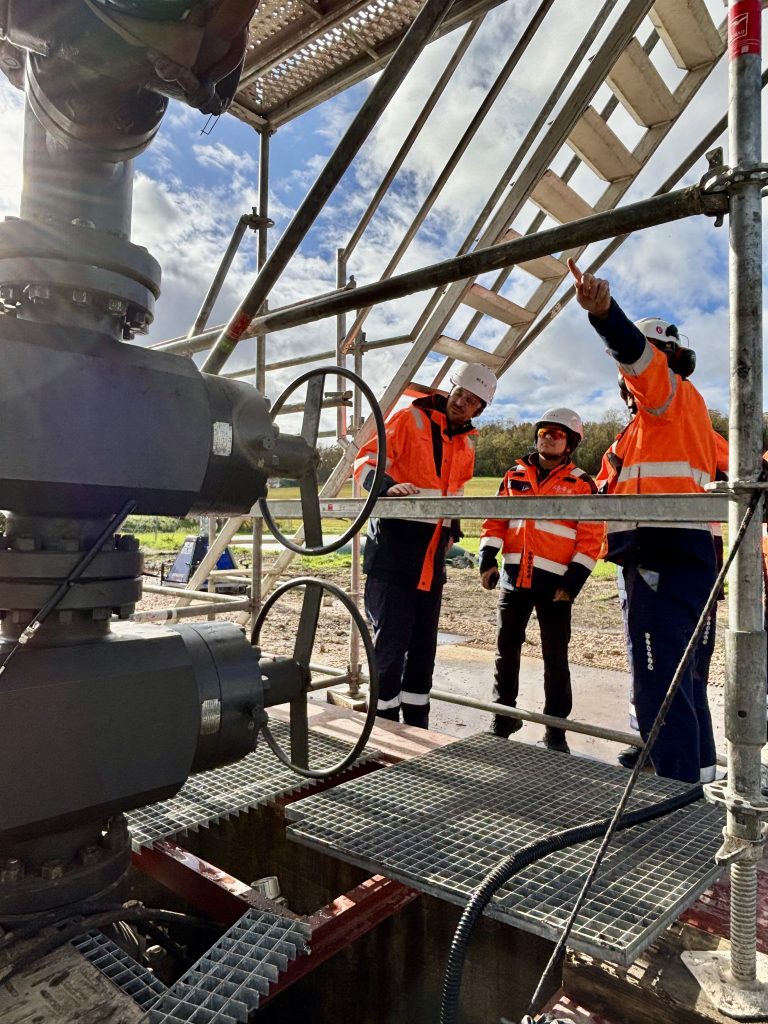
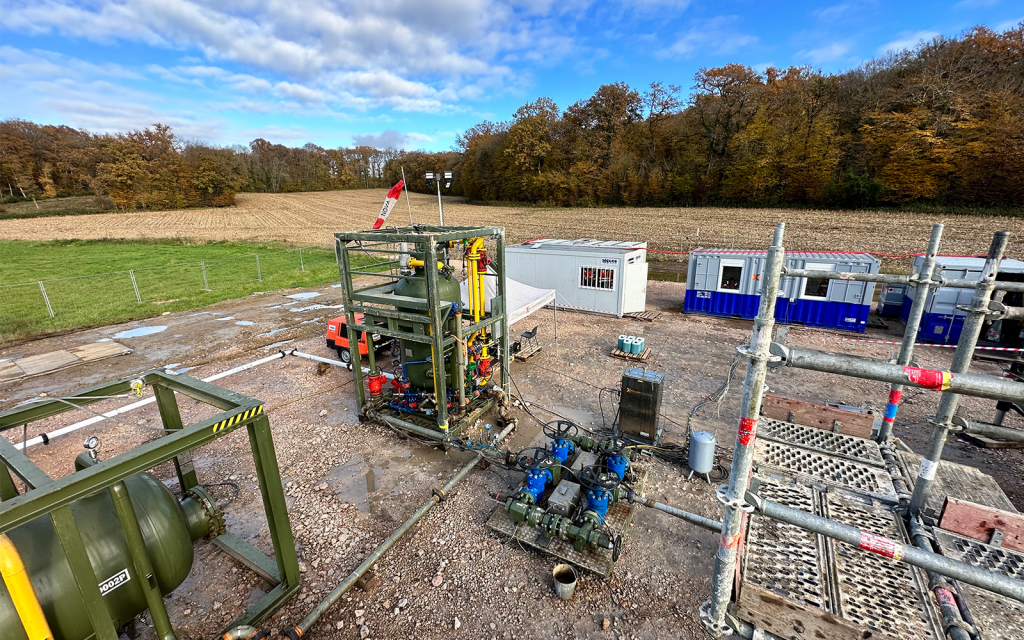
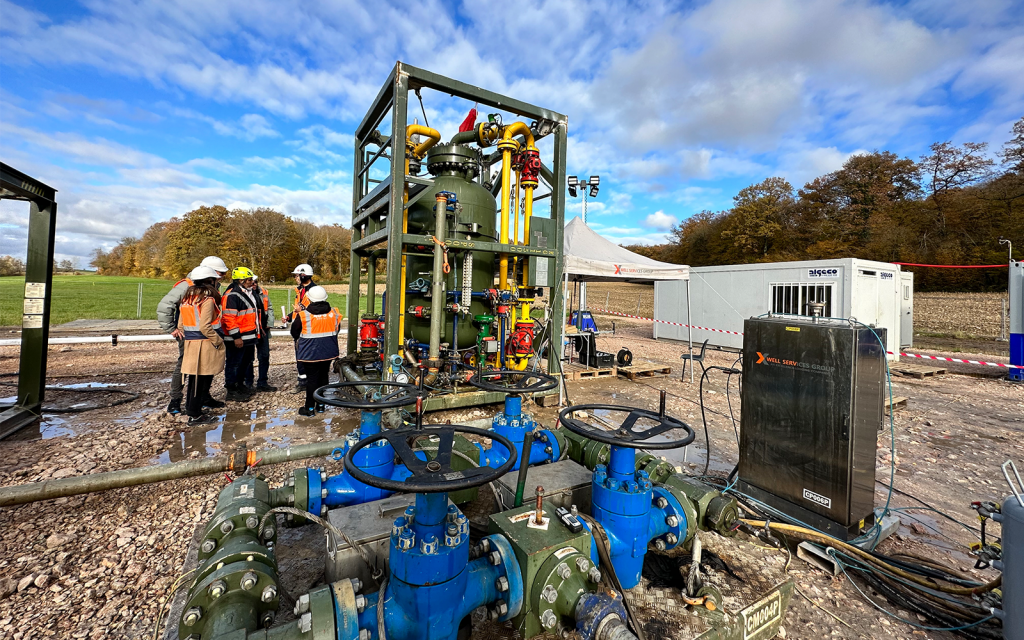
Well Test
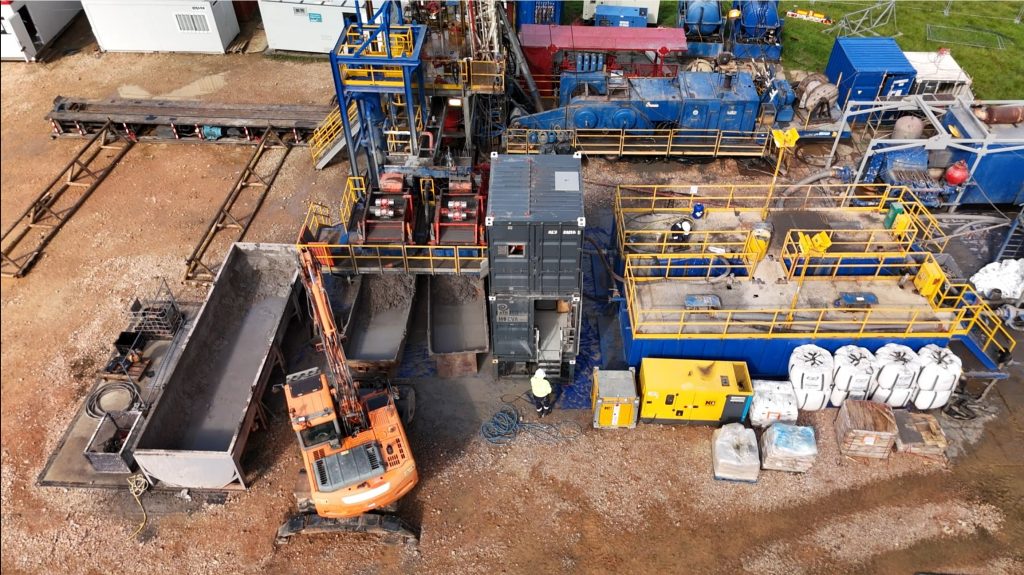
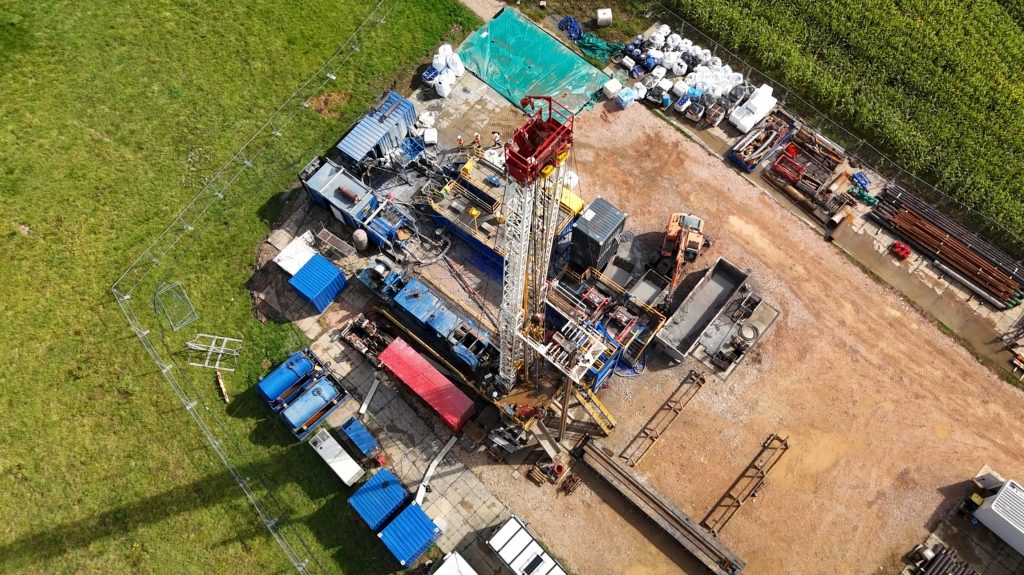
The well test was carried out on the well drilled, in Mazerolles-le-Salin.
This step involves measuring the concentration of helium in the gas mixture and assess the size and economic viability of the deposit.
August 2025
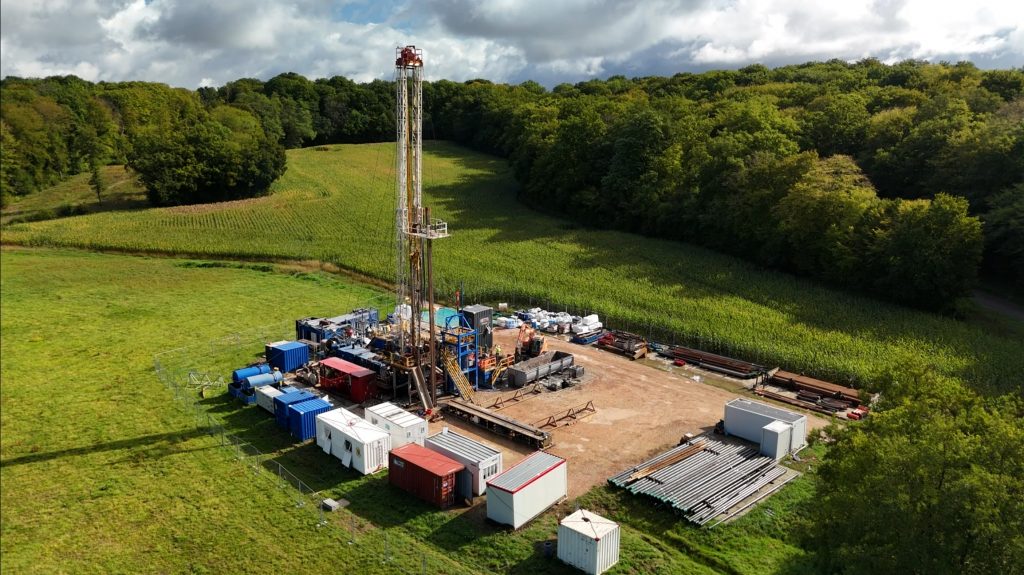
Medium-depth drilling
The drilling campaign was carried out in Mazerolles-le-Salin.
This step involves confirming the presence of helium and to recognize and characterize the geological formations in which helium could be contained.
What's next?
If the drilling campaign proves successful and confirms the helium potential, further work may be carried out. Ultimately, the aim is to valorize helium economically, produce this strategic resource in the Doubs region, and supply local industries.
A pilot production unit could be considered in the long term, as is the case at our Fonts-Bouillants site in Nièvre, which began helium production in 2025.
We could envisage the same type of unit in the Doubs region. Once the economic and technical potential has been validated, long-term industrial production would be considered. The infrastructure would be very modest in size, equivalent to an agricultural shed. It would have to reconcile industrial activity with respect for the environment.

The pilot helium production unit in Nièvre (Fonts-Bouillants Project).

