
Brimir
Helium “Made in Germany”!
Between the 1960s and 1980s, numerous exploratory wells were drilled in search of hydrocarbons in the state of Mecklenburg-Vorpommern, in northeastern Germany. In several areas, these wells did not reveal hydrocarbons but a gas mixture rich in nitrogen and helium. As they were of no technical or economic interest at the time, these resources were simply not exploited.
In the context of Europe and Germany's quest for greater sovereignty, the supply of helium in the area is now of strategic importance, and 45-8 ENERGY is now interested in exploiting this resource discovered more than 60 years ago. An application for an exploration license was submitted in September 2023 to the state mining authority, Bergamt Straslund.
In November 2023, 45-8 ENERGY was granted the exploration license, named Brimir. It covers an area of 113 km² in northeastern Germany and encompasses seven municipalities.
With the granting of this license, which is valid for a period of five years, we hope to deepen our geological knowledge of the area and confirm its significant helium potential.
Brimir project

Between the 1960s and 1980s, a large number of exploratory wells were drilled in search of hydrocarbons in Mecklenburg-Vorpommern, in north-east Germany. In several areas, these wells have revealed no hydrocarbons, but a gaseous mix rich in nitrogen and helium. These resources were not technically and economically attractive at the time, and were simply not exploited.
As Europe and Germany pursue greater sovereignty, helium supply has become a strategic priority. 45-8 ENERGY is now focusing on developing this resource, first discovered over 60 years ago.
In September 2023, 45-8 ENERGY applied to the Bergamt Stralsund Mining Authority for an exploration license. In November 2023, 45-8 ENERGY was awarded the exploration license, named Brimir. The license covers an area of 113 km² in north-eastern Germany, including 7 municipalities.
The granting of this exploration license allows 45-8 ENERGY to deepen its geological knowledge of the area and confirm its highpotential. Validating our hypotheses will pave the way for helium development in the region.
Industrial production will be considered to support territorial sovereignty, as helium is a strategic resource essential to many German industries. The Brimir project aims to establish local helium production and consumption.
Size of the exploration area
113 km²
Size of the exploration area
Concerned municipalities
7
Concerned municipalities
Granted period
5 ans
Granted period
Objectives
Deepen our existing geological knowledge
Accurately characterize geology of the area and identify most suitable zones for a helium-rich mix gas.
Quantify volumes of helium that are accumulated in the subsurface and assess the technical and economic potential, all with the utmost respect of the environment and local residents.
Exploration area
45-8 ENERGY is interested in the north-east of Germany, in particular the Land of Mecklenburg-Vorpommern, known for its helium-rich potential, following various acquisitions.
45-8 ENERGY is focusing on an area of 113 km², covering 7 municipalities:
- Brünzow
- Katzow
- Kemniyz
- Neu Boltenhagen
- Rubenow
- Wolgast
- Wusterhusen
During the next few years, data will be acquired in these municipalities. All these acquisitions will have a limited and temporary impact on the environment and local residents.
Key steps
Forecast calendar.
Local helium with a strategic project
Germany consumes 9.5 Mm3 of helium per year, making it the world’s fifth largest consumer. Most of its helium is imported from the United States, Qatar, Algeria, and Russia and is used by high-tech industries located in the country.
In a context where the resource is becoming critical, rare, and subject to frequent shortages, it is essential to be able to produce the resource as close as possible to European consumption centers in order to ensure a European supply of helium.
Operations
Ongoing
November 2025 – March 2026
Preliminary works for deep drilling
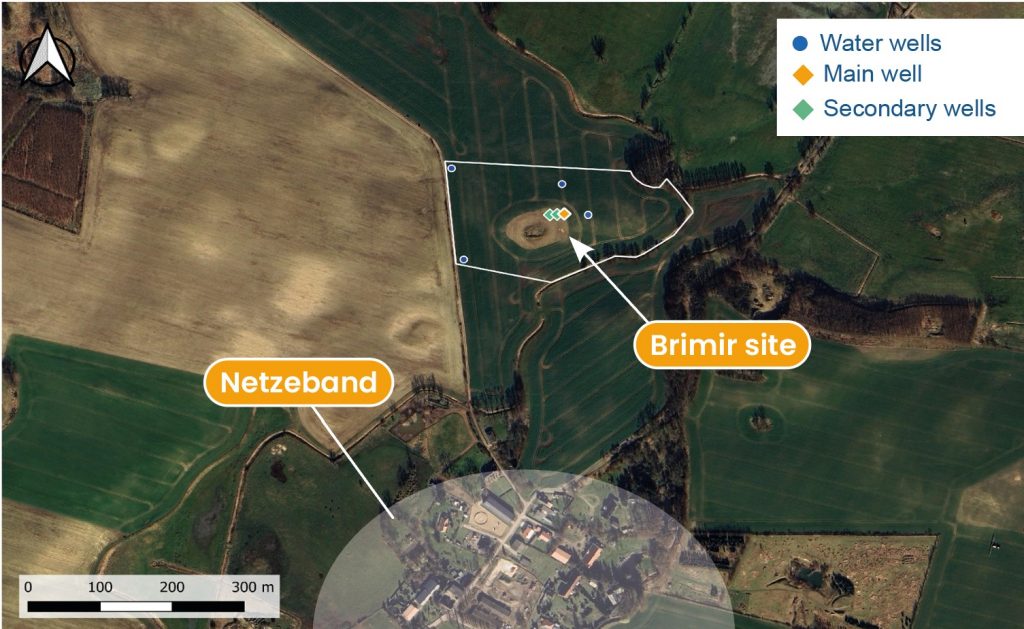
Investigations have shown that the best geological conditions for finding helium deep in the subsurface is in the Netzeband area.
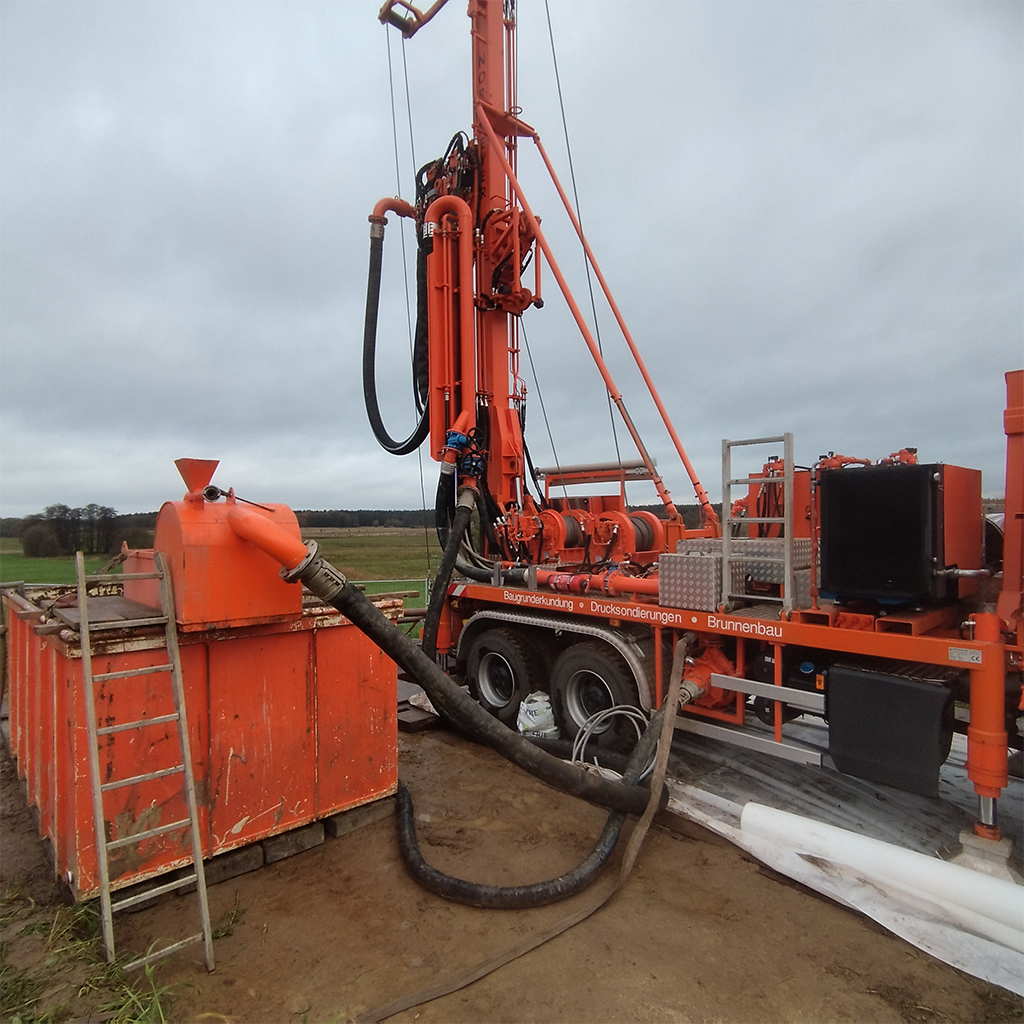
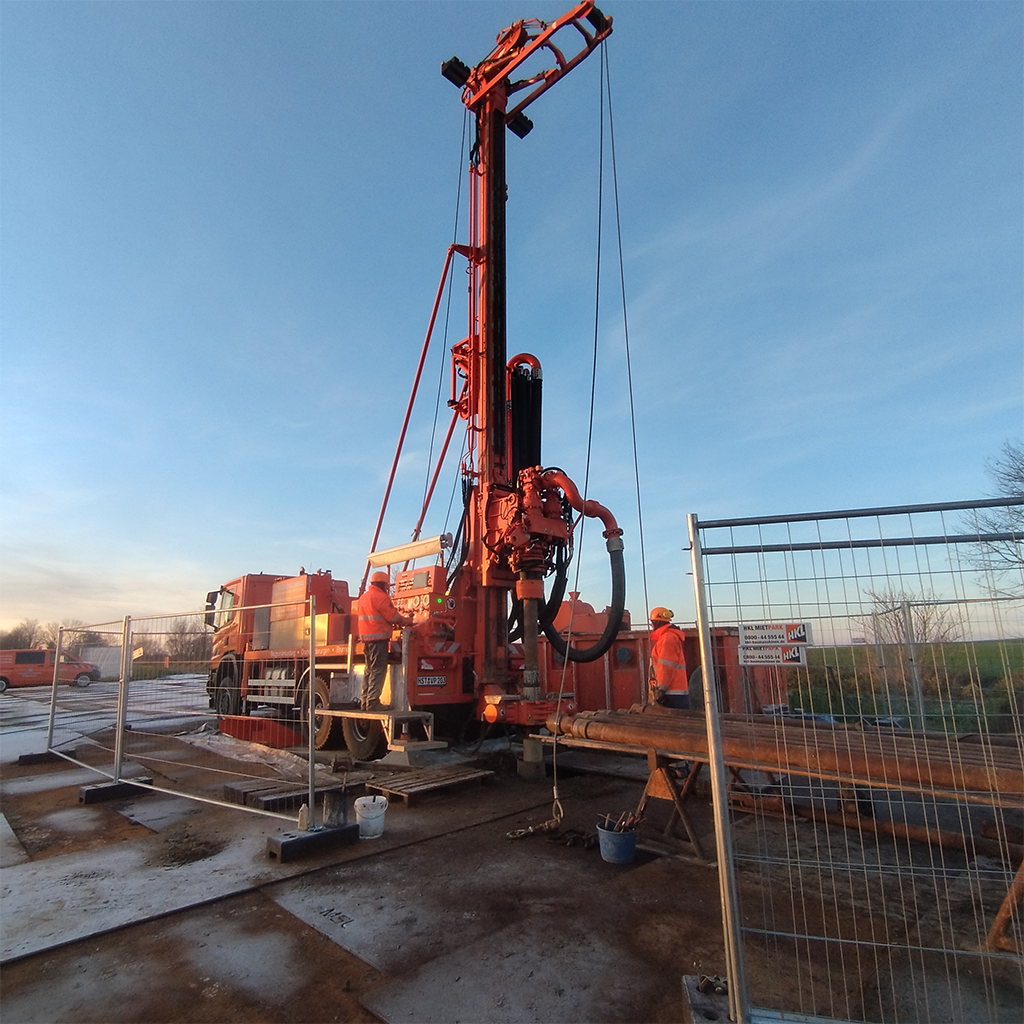
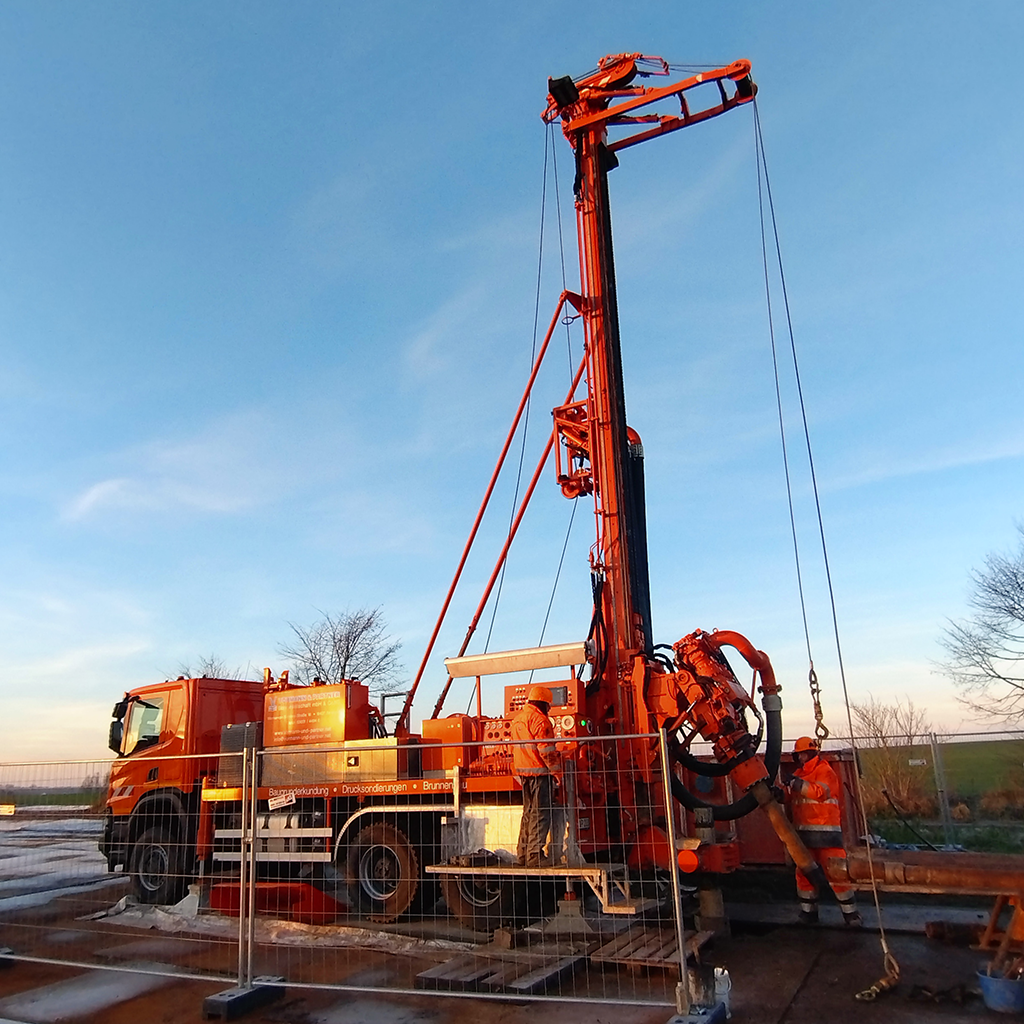
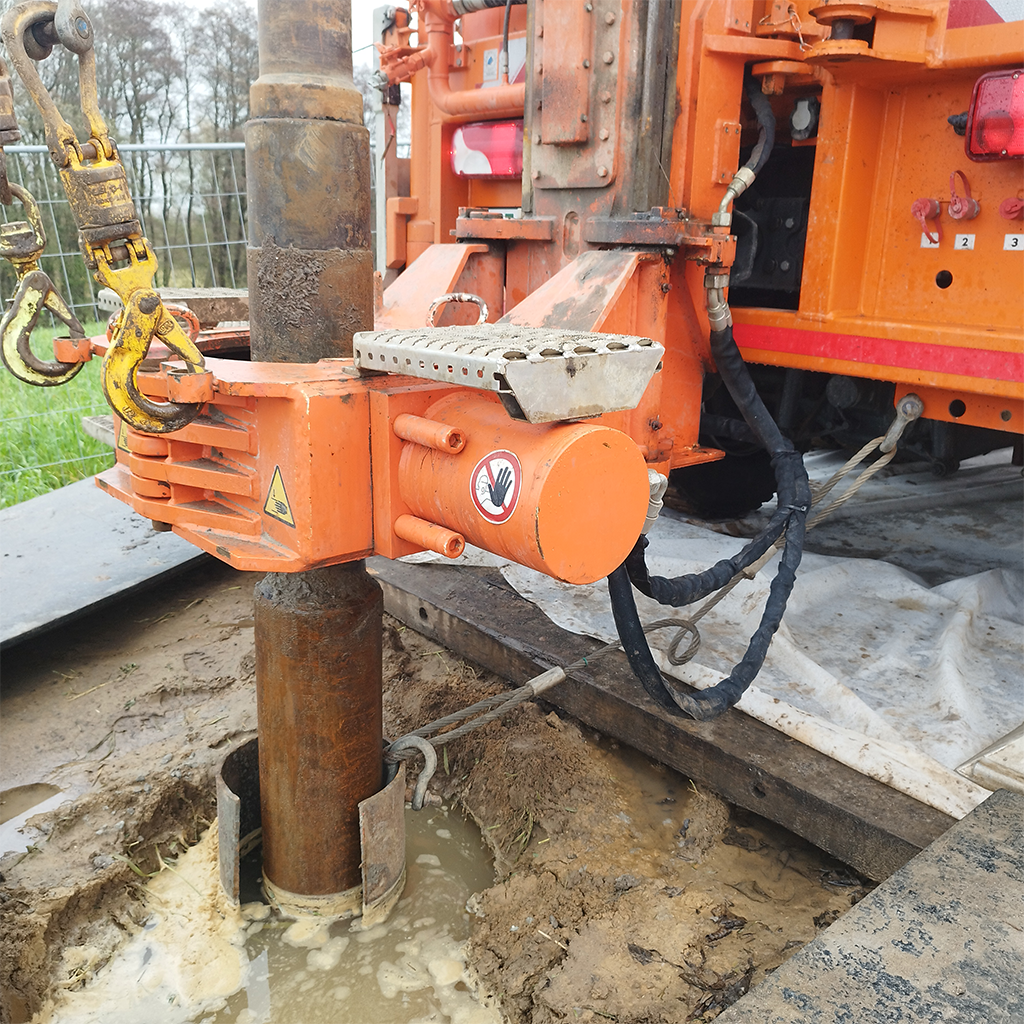
This stage involves drilling four water wells and installing a conductor pipe in preparation for next deep drilling operations.
The preparatory works are planned for November 2025 to March 2026
- 4 water wells drilled to a maximum depth of 40 meters
- One standpipe drilled up to 135 meters and two auxiliary standpipes (each approx. 40 meters deep)
- Carried out on the ‘Brimir’ site, approximately 350 meters north of Netzeband.
- The preparatory works will typically take place only during daytime hours and on weekdays. (Only for the deep drilling in the second half of 2026 will 24-hour operation will be necessary).
Upcoming
March – June 2026
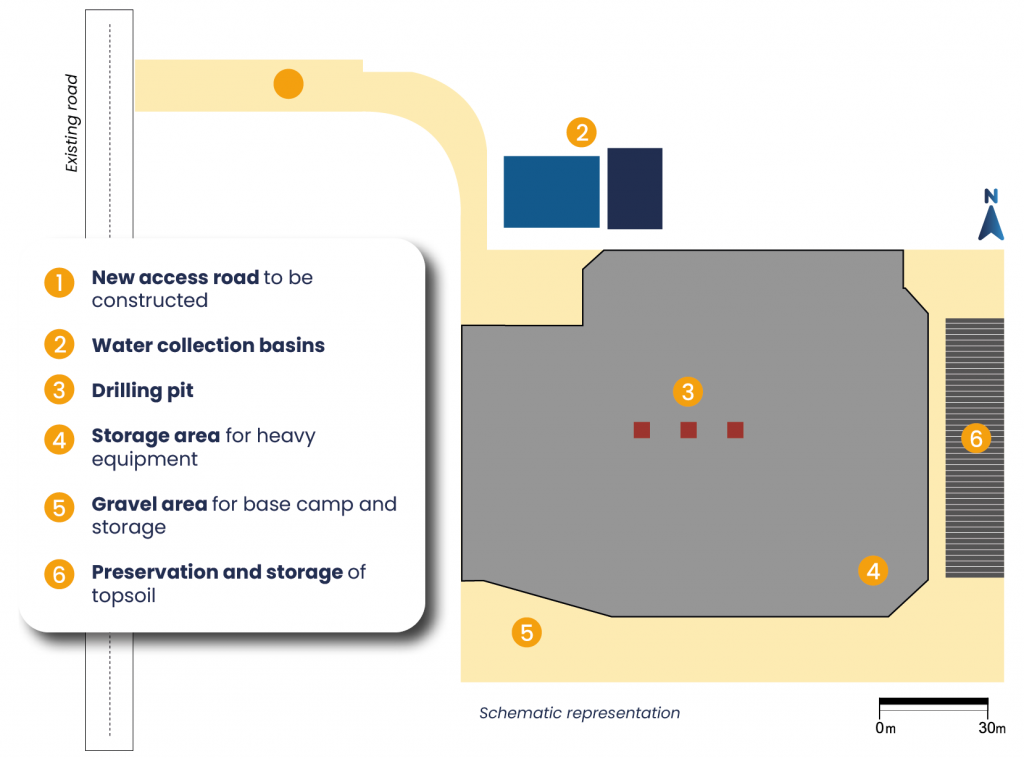
Well pad construction
Construction will take approximately 4 months.
The platform measures
8,778 m².
This step enables the construction of a stable and secure platform to accommodate the drilling.
Completed
January 2025
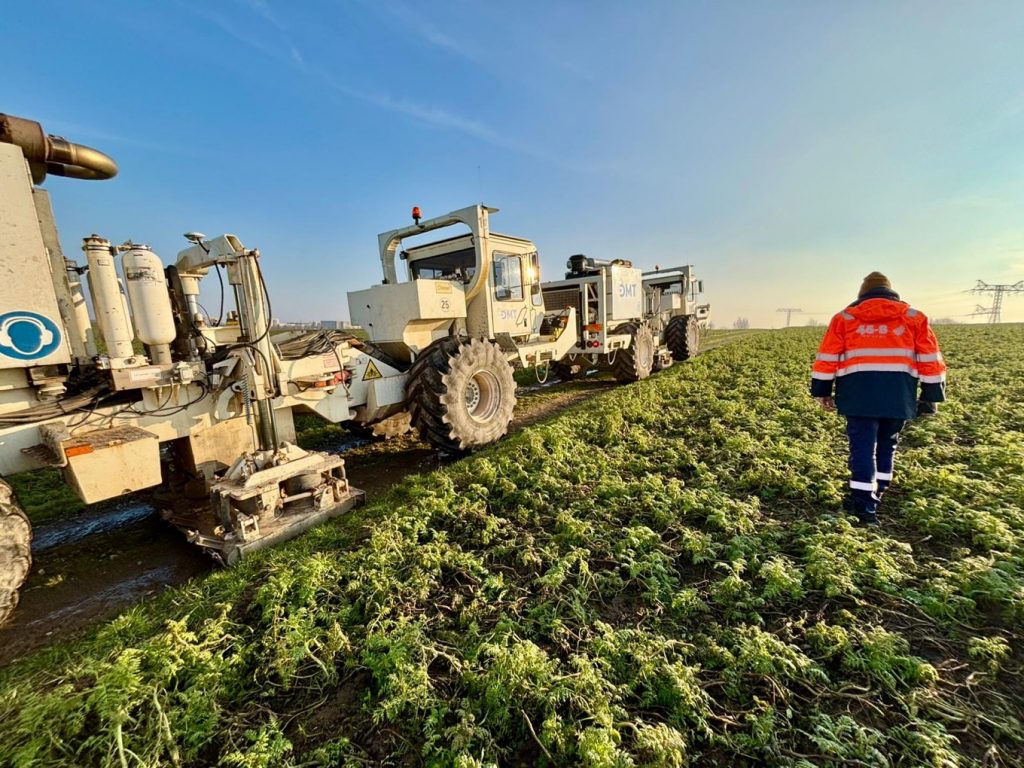
3D reflection seismic
8 municipalities: Brünzow, Katzow, Kemnitz, Kröslin, Neu Boltenhagen, Rubenow, Wolgast et Wusterhusen.
The acquisition took place in early 2025. The results have been available since late 2025.
This acquisition provides a better understanding of the subsurface structure and validates the helium potential.
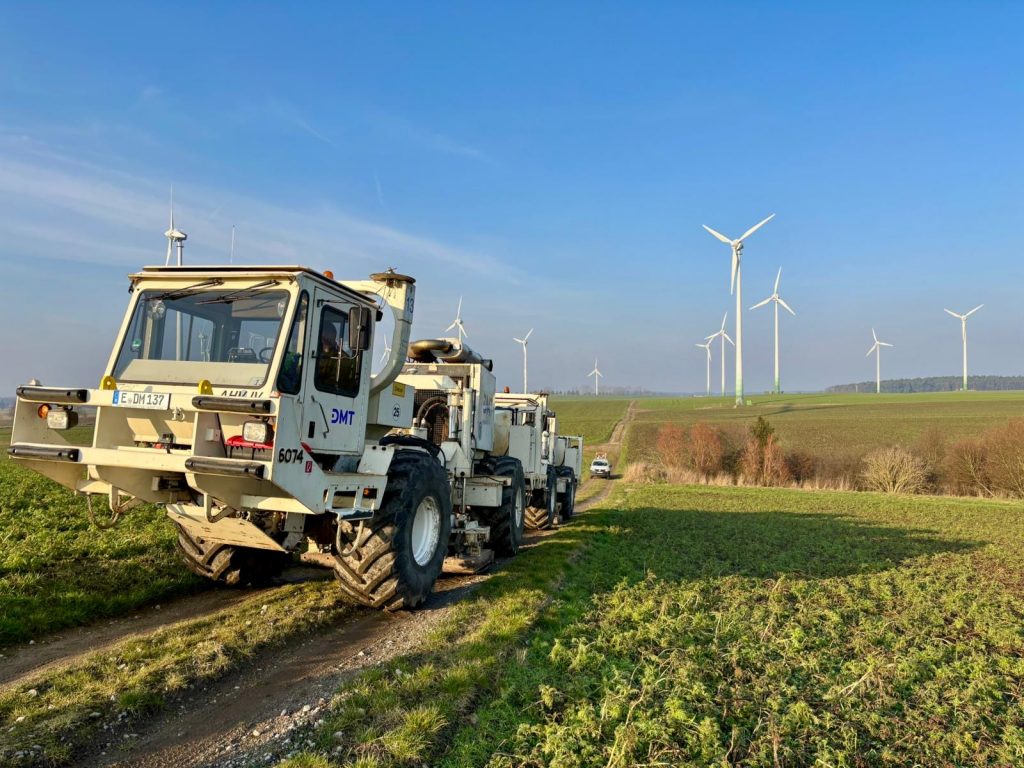
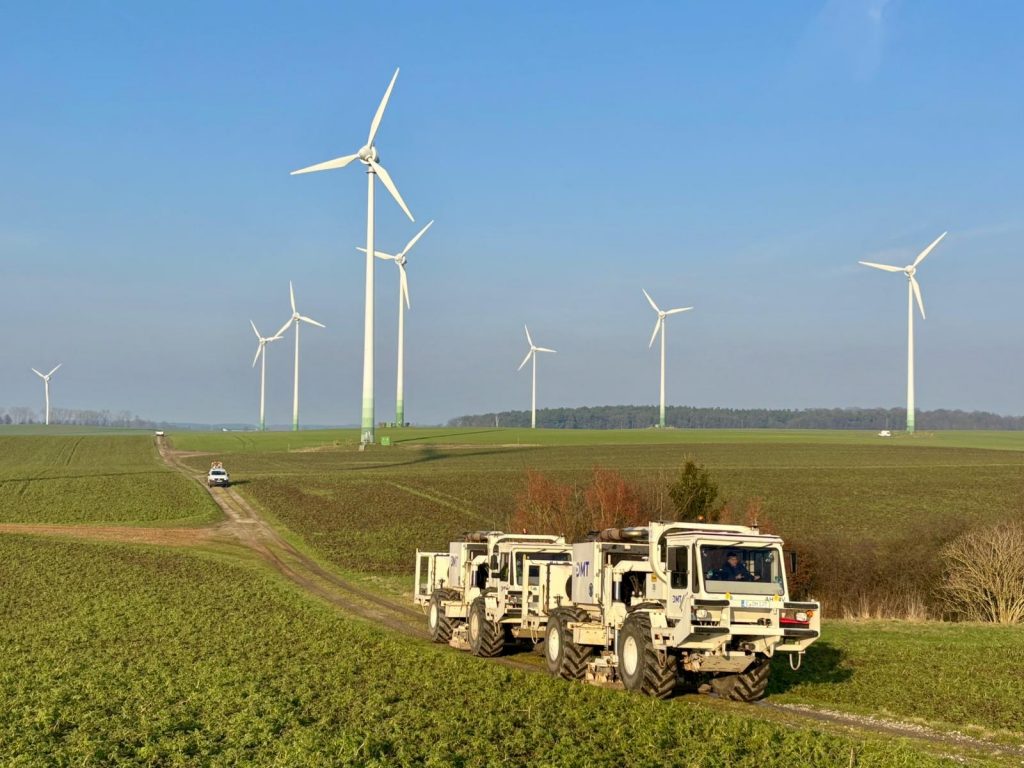
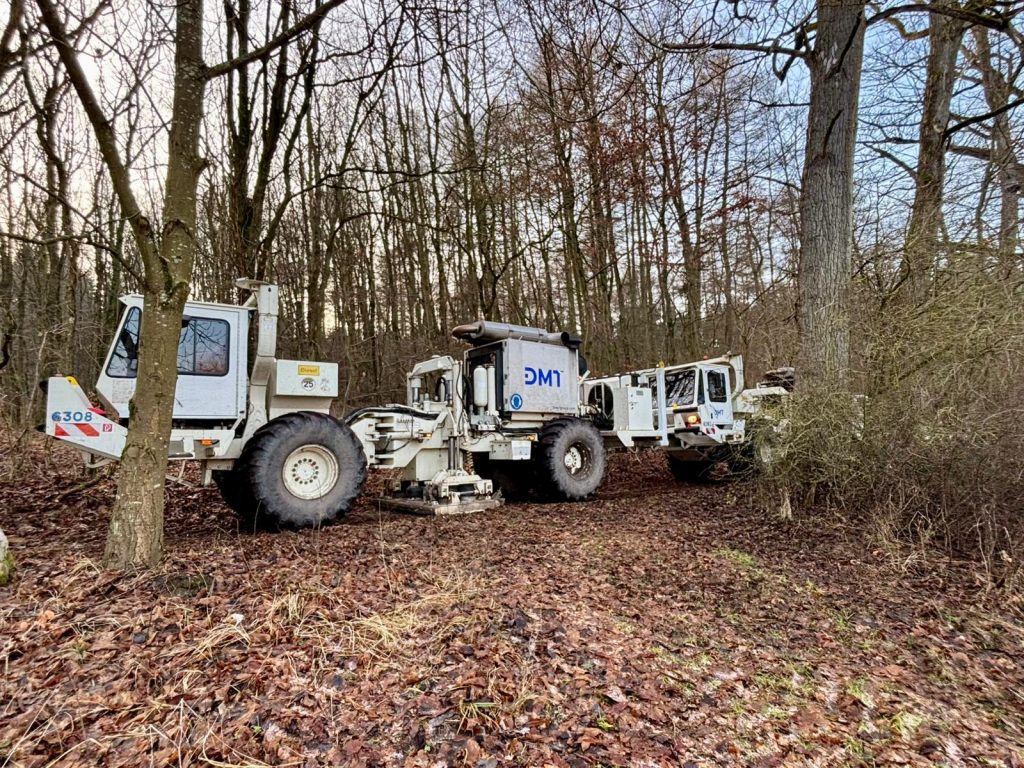
Reflection Seismic is a non-invasive and non-destructive method of imaging the subsurface, deployed only on the surface. It has no impact on the environment or homes.
It involves a two-step measurement process:
- the deployment of seismic sensors (geophones);
- and the transmission of waves into the ground via a plate attached to a truck that vibrates against the ground, or via small explosives placed at shallow depths.
The echoes of these waves on the different geological layers are then picked up and recorded by the geophones. Once analyzed, this provides geologists with information about the structure and nature of the terrain.

Helium at the heart of our exploration
Helium
Drilling was carried out between the 1960s and 1980s in search of hydrocarbons. Instead of finding hydrocarbons, the results revealed the presence of a fraction of helium in the gas mix of the Brimir zone, associated with nitrogen. At the time, exploration was exclusively dedicated to hydrocarbons and the associated helium was not targeted.
The gas mix in the Brimir zone consists of helium and nitrogen. 45-8 ENERGY aims to develop this critical and strategic resource for Germany, where numerous consumer industries are located.
Nitrogen
The Brimir gas mix is mainly composed of nitrogen.
Nitrogen is the most abundant element in the Earth’s atmosphere (it accounts for approximately 78% of its composition). Due to the abundance of nitrogen in the air, its appeal is limited and its economic use unlikely.
Its release to the atmosphere has no risks for the population and the environment (does not contribute to the greenhouse effect).

